
Director’s Message
Nowadays we live in a world that is composed of a wide variety of systems, including, for example, various production systems, transportation systems, power supply and distribution systems, computer and communication networks, banks and financial systems, and ecological systems. These systems form an indispensable environment on which our life is dependent. Actually, the human society is exactly a huge social network system with communicating individuals and communities owing to social and business relationships. All these systems are not independent of each other, but instead intrinsically related and may affect each other. For instance, production systems, including industrial and agriculture production processes, provide necessities to support our material life, while, on the other hand, they inevitably consume natural resources and energy, which, if not well managed and controlled, can yield enormous impacts on ecological systems and may pollute our environment. The polluted environment harms our health. For instance, the development of automobile industry significantly facilitates commuters and travelers. However, a deluge of vehicles in an urban area usually results in road congestion and causes air pollution. All in all, the systems surrounding us are mutually dependent and influence each other. Furthermore, each system itself can contain many sub-systems that are also mutually related and impacting each other. Consequently, the operation and management of these systems are extremely complicated and challenging.
Systems engineering, originally proposed by E. C. Molina, Bell Lab, and A. K. Erlang, Copenhagen Telephone Company, in the early 20th century, is a subject that explores the dynamics of the aforementioned systems by using scientific and systematic procedures and recipes to develop efficient and effective approaches to their control and operations. Specifically, it attempts to analyze and reveal the inherent interactions between systems and their sub-systems from a system’s viewpoint. Systems engineering has undergone for a long time and made tremendous contributions to the development of our society. Over the past decades, the extensive applications of information technologies witnessed the exuberant blooming of computer-integrated systems with increasing complexity in their structure and scale. In addition, the intramural states of a system evolve rapidly, leading to the dramatic burgeoning of new issues to be addressed. To deal with the new systems, issues, and concomitant technical barriers, novel theories and technologies are overwhelmingly imperative.
The mission of Macau Institute of Systems Engineering is to advance the Systems Engineering theory, methods and technologies in order to cope with the new problems and new issues. We intend to apply the advanced system theories and technologies, including control theory, optimization, mathematics, and statistics, to model increasingly complex systems, analyze the relationship among systems, and reveal their evolution mechanism. Thus we can formulate the most effective operation and control methodologies and technologies and make significant contributions to the sustainable development of our society.
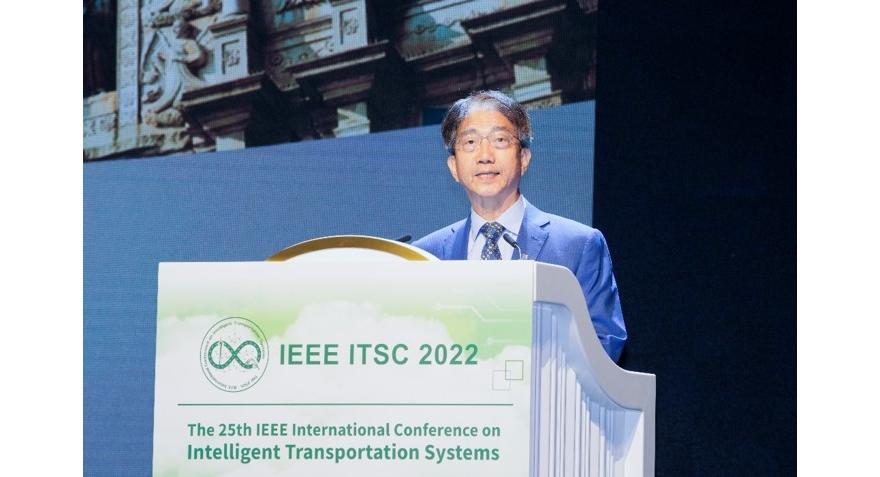
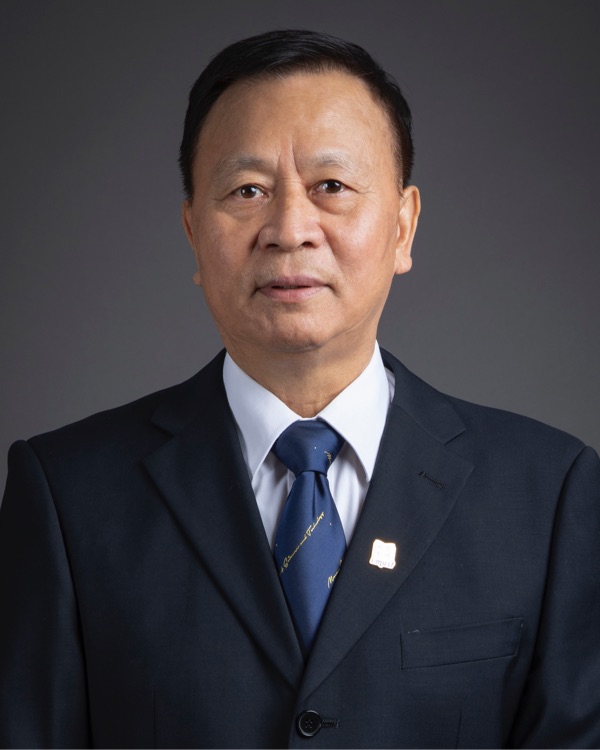
Director of Macao Institute of System Engineering
Prof. Wu NaiQi